
Voice Search SEO for Businesses: Strategies to Improve Google Rankings Fast
Voice search is transforming the way people interact with the internet. With the rise of smartphones, smart speakers, and virtual assistants, users now prefer speaking their queries instead of typing them. For businesses, this shift means traditional SEO strategies may no longer be enough. Implementing Voice Search SEO for businesses ensures your website appears in the results for conversational and natural language queries, giving you a competitive edge in search visibility. Optimizing for voice search allows companies to connect with audiences more directly and efficiently, improving engagement and increasing conversion potential.
Partnering with a professional digital marketing agency in Kochi can provide valuable insights and expertise in voice search optimization. By combining advanced SEO techniques with high-quality content, businesses can capture more traffic, improve their online presence, and stay ahead of competitors. Whether your goal is to enhance brand awareness or generate leads, voice search optimization has become a critical component of any digital marketing strategy.
What is Voice Search SEO for Businesses?
Voice Search SEO is the process of optimizing your website and content so that it can be discovered and accurately answered by voice-enabled devices. Unlike traditional SEO, which focuses on typed keywords, voice search relies on natural language and question-based queries.
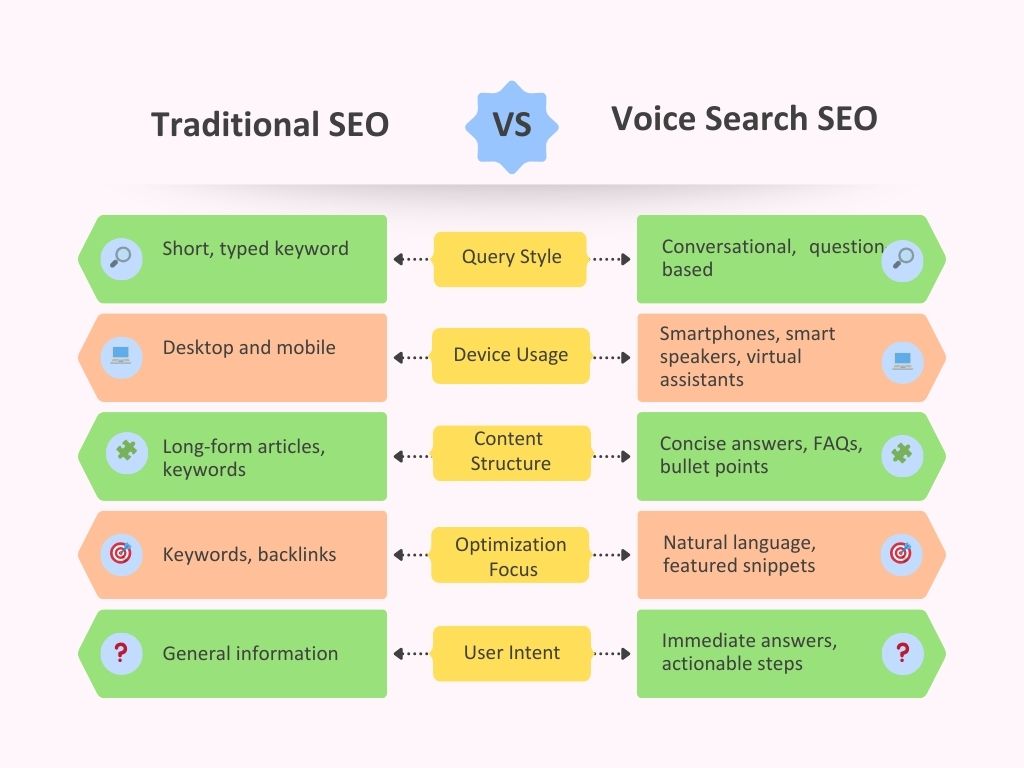
Optimizing for voice search helps businesses reach audiences more effectively, especially on mobile devices where users expect quick and accurate answers.
Why Voice Search Optimization is Crucial for Businesses
Voice search usage is growing rapidly. Failing to optimize can result in lost opportunities and missed traffic. Businesses need to focus on voice search for these reasons:
- Mobile-first behavior: Most voice searches occur on mobile devices.
- Smart speaker adoption: Amazon Echo, Google Nest, and Apple HomePod are increasing in homes.
- Conversational queries: Users speak full sentences rather than typing keywords.
- Higher conversion intent: Spoken queries often indicate urgency or purchase intent.
- Improved accessibility: Voice search helps users who have disabilities or prefer hands-free searches.
Studies predict that over 50% of online searches will be voice-based by 2025, emphasizing the need for businesses to adopt voice search strategies now.
How to Improve Google Rankings Using Voice Search SEO
1. Optimize for Conversational Keywords
Voice search queries are conversational and often longer than typed queries. Optimizing for long-tail keywords increases the chances of being discovered.
Tips for Optimization:
- Use question phrases: “how,” “what,” “why,” “when,” “where”
- Include full-sentence questions in headings or FAQ sections
- Monitor trending queries with tools like AnswerThePublic and SEMrush
2. Use Structured Data & Schema Markup
Structured data helps search engines understand the content of your site, increasing your chances of appearing in voice search results.
Useful Schema Types:
Schema Type | Purpose |
FAQ Schema | Displays common questions directly |
How-To Schema | Provides step-by-step guidance |
Product Schema | Gives product details for queries |
Local Business Schema | Supports “near me” searches |
Adding schema ensures your content is voice-search ready and improves the chances of featured snippet placement.
3. Enhance Website Speed and Mobile Experience
Voice search users expect fast answers. Optimizing your site’s performance is critical.
Quick Improvements:
- Compress images and enable lazy loading
- Implement responsive design for all devices
- Minimize unnecessary scripts and plugins
- Use browser caching and a content delivery network (CDN)
Professional digital marketing services in Kerala teams can help implement these technical improvements efficiently.
4. Focus on Featured Snippets
Featured snippets are often used by voice assistants to answer queries. Optimizing for snippet positions can improve voice search visibility.
Tips for Featured Snippet Optimization:
- Place concise answers at the start of paragraphs
- Use bullet points and numbered lists
- Include statistics and actionable steps
- Organize content with clear H2/H3 headings
5. Leverage Local SEO Signals
Local SEO is crucial, even for voice search. Many voice searches include local intent, even if not explicitly mentioned.
Local SEO Best Practices:
- Keep consistent NAP (Name, Address, Phone) information
- Encourage online reviews on Google and other platforms
- Use FAQ sections for local questions
- Add local business schema markup
Content Strategies for Voice Search SEO
Content is the backbone of voice search optimization. The goal is to make it easy for voice assistants to read and deliver answers efficiently.
Best Practices for Content:
- Short, digestible paragraphs (2–4 lines)
- Conversational tone with natural language
- Include FAQs, How-To guides, and step-by-step instructions
- Highlight key information with tables, lists, or bullet points
Content Type vs. Search Intent Table:
Content Type | Search Intent |
FAQs | Quick answers to common questions |
How-To Guides | Step-by-step instructions |
Lists & Tables | Easily scannable information |
Blog Articles | In-depth coverage of user queries |
For best results, an SEO company in Kerala can structure your content for voice search and optimize both on-page and technical elements effectively.
Advanced Strategies for Voice Search SEO
1. Use Natural Language Across All Pages
- Write in a conversational tone
- Avoid keyword stuffing; focus on questions users would naturally ask
2. Target Mobile and Voice-First Indexing
- Ensure pages are mobile-friendly
- Optimize for Core Web Vitals
- Monitor mobile usability in Google Search Console
3. Incorporate Multimedia Elements
- Voice search often pulls content from videos, images, or podcasts
- Add descriptive alt text and transcripts for accessibility
4. Regularly Update Content
- Voice search favors fresh content
- Update FAQ answers and how-to guides periodically
5. Track Voice Search Performance
- Use Google Analytics and Search Console
- Focus on metrics: snippet positions, click-through rates, voice queries
Monitoring and Measuring Voice Search SEO Success
Tracking and analyzing voice search performance ensures continued growth.
Key Metrics:
- Voice search traffic from Google Search Console
- Featured snippet appearances
- Page load speed and mobile usability
- Engagement metrics: bounce rate, average session duration
Regular tracking allows businesses to fine-tune strategies and maintain high rankings in voice search results.
Conclusion
Optimizing for voice search SEO for businesses is no longer optional it’s essential for modern digital marketing success. By partnering with a trusted digital marketing agency in Kochi and focusing on conversational keywords, structured data, mobile optimization, and featured snippets, companies can significantly improve visibility and reach. Integrating these strategies ensures that your business captures traffic from voice-enabled devices, enhancing engagement, conversions, and overall online presence.
Partnering with experts like Brandlabz guarantees a strategic approach to voice search SEO, combining technical expertise and high-quality content creation. Take the next step in growing your business by implementing voice search strategies today. Please reach out to our team to begin enhancing your search visibility with our cutting-edge SEO solutions.
FAQs
What is the difference between traditional SEO and voice search SEO?
Traditional SEO focuses on typed keywords, while voice search SEO emphasizes conversational, question-based queries and featured snippets.
How quickly can voice search optimization improve Google rankings?
Results may vary, but implementing structured data and conversational content can show improvements in 2-3 months.
Do all businesses need to invest in voice search SEO?
Yes, especially businesses targeting mobile users, smart device owners, and local searchers.
Can structured data alone improve voice search results?
Structured data helps, but it must be combined with conversational content and a mobile-friendly site.
Which content formats work best for voice search optimization?
FAQs, how-to guides, short paragraphs, and bullet points are most effective for voice queries.